

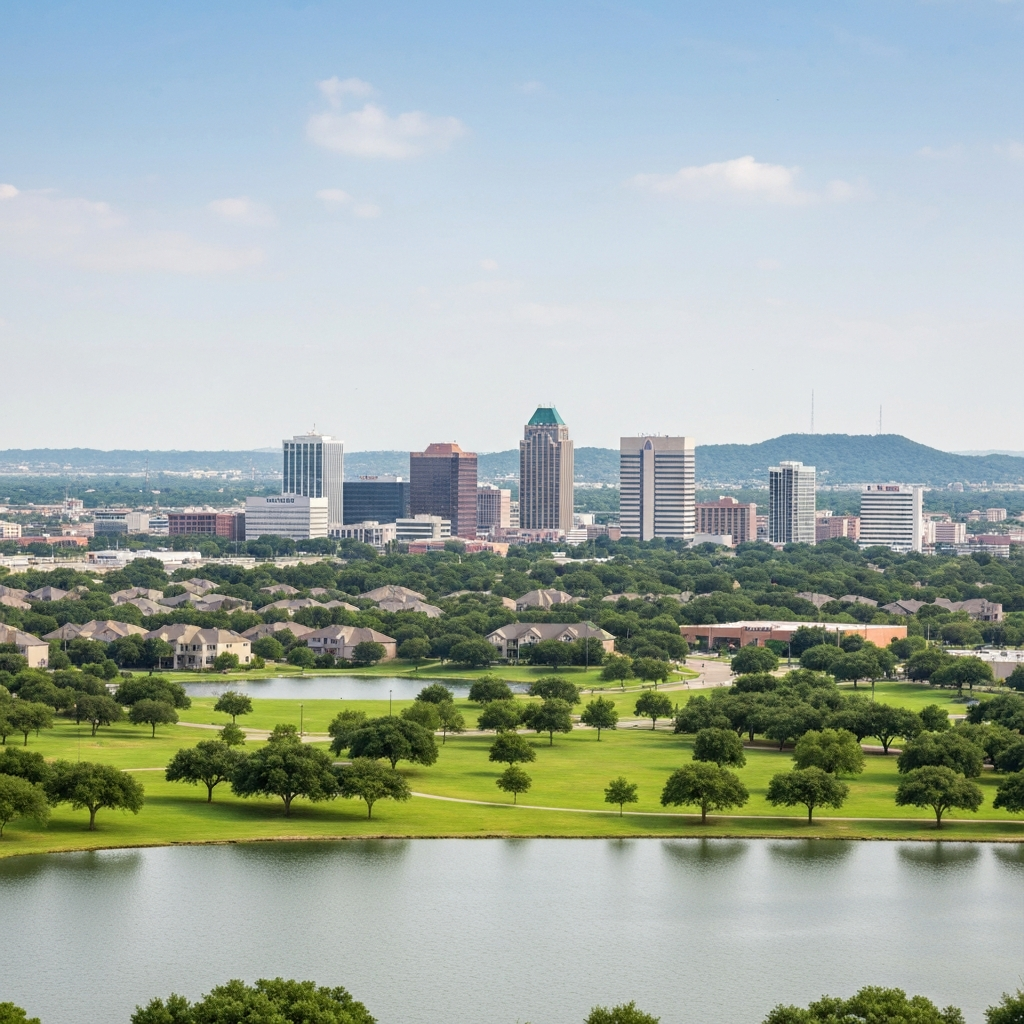
Grand Prairie, Texas, experiences a humid subtropical climate characterized by hot summers and mild winters. Understanding these patterns is essential for residents and visitors alike.
Seasonal Weather Patterns
Spring
Spring, from March to May, sees temperatures rising from an average high of 67.5°F (19.7°C) in March to 82.2°F (27.9°C) in May. Correspondingly, average low temperatures increase from 50.7°F (10.4°C) to 64.8°F (18.2°C). May typically records the highest average rainfall of 1.26 inches (32mm).
Summer
Summers, spanning June to August, are notably hot, with average high temperatures peaking at 96.3°F (35.7°C) in August. Nighttime temperatures remain warm, averaging around 77.4°F (25.2°C) in August. Despite the heat, summer showers are common, with rainfall averaging between 0.63 inches (16mm) and 0.98 inches (25mm).
Autumn
Autumn months, from September to November, bring a welcome decrease in temperature. September experiences an average high of 88°F (31.1°C), cooling to 64.8°F (18.2°C) by November. Rainfall patterns vary, with September recording 0.59 inches (15mm), increasing to 0.98 inches (25mm) in October, and tapering to 0.39 inches (10mm) in November.
Winter
Winters, from December to February, are mild, with average high temperatures ranging from 55.9°F (13.3°C) in December to 58.5°F (14.7°C) in February. Nighttime lows dip to 39.2°F (4°C) in December, rising to 42.4°F (5.8°C) by February. Rainfall is lowest in winter, with December averaging 0.35 inches (9mm), and snowfall is minimal, amounting to just 0.16 inches (4mm) in February.
Environmental Initiatives
The City of Grand Prairie is committed to sustainability and environmental stewardship through various programs and initiatives.
Household Hazardous Waste Program
The city’s Household Hazardous Waste (HHW) program assists residents in safely disposing of materials that can harm the environment if not handled properly. This includes household cleaners, lawn and pool chemicals, paint, motor oil, cooking oil, fluorescent bulbs and tubes, household and automotive batteries, and pharmaceuticals. The city holds multiple collection events each year to facilitate proper disposal. Residents can register online for the next HHW Collection Day. Learn more.
Energy and Sustainability in Schools
The Grand Prairie Independent School District (GPISD) has established a long-range energy plan aiming to reduce the district’s annual electric consumption by five percent. The mission is to create a sustainable and energy-efficient learning environment that nurtures environmental stewardship, reduces operational costs, and fosters a culture of sustainability among students, staff, and the community. Notably, 14 campuses have received Energy Star Certifications, indicating they are more efficient than 75% of similar properties nationwide. Learn more.
City Sustainability Efforts
The City of Grand Prairie is actively working to create a more sustainable future by reducing emissions, enhancing energy efficiency, and supporting environmental initiatives. Key actions include:
- Membership in ICLEI – Local Governments for Sustainability, a global network committed to sustainable urban development.
- Conducting a Greenhouse Gas Emissions inventory on city operations.
- Allocating funds from the Energy Efficiency and Conservation Block Grant (EECBG) Program to install solar-powered electric vehicle charging stations.
- Supporting the North Central Texas Council of Governments (NCTCOG) in obtaining Climate Pollution Reduction Grants to fund projects improving air quality in the region.
- Continuing efforts to electrify the city fleet.
These initiatives reflect the city’s dedication to environmental responsibility and sustainability. Learn more.
Understanding Grand Prairie’s climate and the city’s environmental efforts empowers residents to make informed decisions and participate in sustainability initiatives, contributing to a healthier and more sustainable community.